

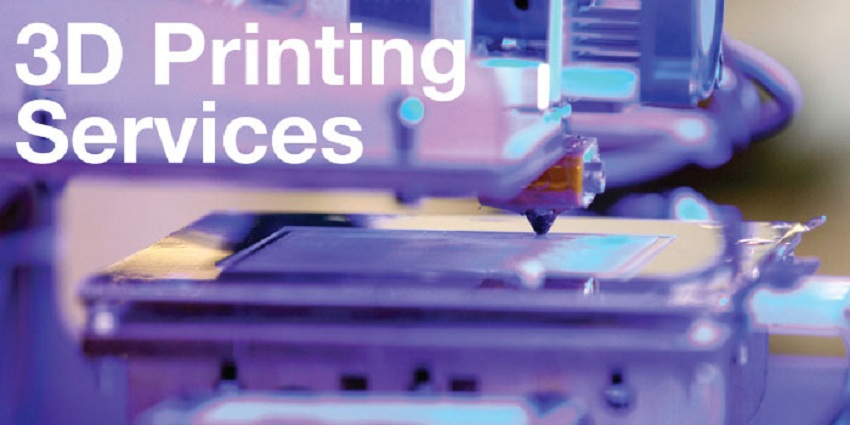
Western Australia’s manufacturing sector has undergone a significant technological shift over the past decade. At the centre of this evolution is 3D printing — a technology that has moved well beyond prototyping labs and into the heart of active production floors. For manufacturers operating in Perth and across Perth WA, additive manufacturing now plays a critical role in enabling low-volume production that is both cost-effective and technically precise.
This article examines how Perth manufacturers are integrating 3D printing services into their operational frameworks, what technologies they rely on, and why the economics of additive manufacturing make compelling sense for short-run production.
The Case for Low-Volume Production in Perth’s Manufacturing Landscape
Perth’s industrial economy is shaped by its dominant sectors: mining and resources, oil and gas, marine engineering, defence, and construction. Many of these sectors share a common operational challenge — the need for highly specific components in relatively small quantities. Traditional manufacturing methods such as CNC machining and injection moulding often involve high setup costs, making them less cost-effective for production runs under 500 units.
Read More: Understanding the Steps of HR to Support Organizational Change Management: Charles Spinelli
3D printing Perth providers have emerged to address this precise gap. By eliminating the need for hard tooling, additive manufacturing allows Perth manufacturers to produce functional components, enclosures, jigs, and fixtures on demand — without the minimum order quantity constraints tied to conventional methods.
The economics are straightforward. When a mine site in the Pilbara needs 20 custom mounting brackets, or a marine engineering firm in Fremantle requires a small batch of fluid manifolds for an offshore vessel, running those parts through a Perth 3D printing service is often faster and cheaper than sourcing them through traditional manufacturing channels with extended lead times.
Core Additive Manufacturing Technologies Used by Perth Manufacturers
Not all 3D printing technologies are equal, and Perth manufacturers typically select processes based on the mechanical requirements of the end part. Below is an overview of the most commonly deployed technologies in 3D printing services across Perth WA:
1. Fused Deposition Modelling (FDM)
FDM remains the most widely used technology for low-volume production of functional prototypes and structural components. It extrudes thermoplastic filaments such as ABS, PETG, ASA, and Nylon layer by layer. Perth manufacturers in the construction and civil sectors frequently use FDM for bracket prototypes, tool holders, and custom enclosures due to its material versatility and cost efficiency.
2. Selective Laser Sintering (SLS)
SLS uses a high-power laser to bond nylon or composite powder into durable solid parts. Because SLS parts require no support structures during printing, they offer excellent geometric freedom — ideal for complex ducting, fluid channels, and ergonomic housings. Perth’s oil and gas sector has adopted SLS extensively for producing low-volume functional parts that require isotropic mechanical properties.
3. Multi Jet Fusion (MJF)
HP’s Multi Jet Fusion technology has gained considerable traction in Perth 3D printing circles due to its speed and consistency across batches. MJF deposits a fusing agent across a bed of nylon powder before applying infrared energy, producing parts with smooth surface quality and high dimensional accuracy. For manufacturers producing between 10 and 500 units, MJF offers a compelling cost-per-part advantage over SLS.
4. Stereolithography (SLA) and Digital Light Processing (DLP)
These resin-based processes deliver exceptional surface resolution and dimensional accuracy. Manufacturers in Perth’s medical device, electronics, and consumer product industries rely on SLA/DLP to produce functional parts that require high precision and smooth surface quality. Specialised engineering resins allow for high-temperature resistance, flexibility, or optical clarity depending on the application.
5. Direct Metal Laser Sintering (DMLS) / Selective Laser Melting (SLM)
Metal additive manufacturing is increasingly available through 3D printing services in Perth WA, particularly for the mining and defence industries. DMLS and SLM processes produce fully dense metal parts in stainless steel, titanium, Inconel, and aluminium alloys. While per-part costs are higher than polymer printing, the ability to produce complex metal geometries without tooling costs makes this technology highly viable for low-volume metal component production.
Technology Comparison for Low-Volume Production
| Technology | Typical Materials | Best For | Approx. Volume Range | Key Advantage |
| FDM | ABS, PETG, Nylon, ASA | Structural prototypes, fixtures | 1–200 units | Low material cost |
| SLS | PA12 Nylon, Glass-filled Nylon | Complex functional parts | 10–500 units | No support structures |
| MJF | PA12, PA11 | Mid-volume batches | 50–1,000 units | Fast throughput |
| SLA / DLP | Engineering resins | High-detail, tight tolerance parts | 1–100 units | Superior surface finish |
| DMLS / SLM | Stainless steel, Ti, Inconel | Metal functional components | 1–50 units | Complex metal geometry |
Sector-Specific Applications of 3D Printing Services in Perth
Mining and Resources
The resources sector drives a substantial portion of demand for 3D printing in Perth WA. Equipment downtime at mine sites carries enormous financial penalties, making rapid part replacement a critical operational priority. Perth 3D printing providers are increasingly called upon to produce:
- Custom sensor housings designed to withstand high-vibration environments
- Replacement components for legacy machinery where OEM parts are discontinued or have excessive lead times
- Protective cable management and conduit brackets tailored to specific machine frames
- Functional test jigs for calibrating instrumentation on site
The ability to supply these components within 24 to 72 hours — compared to weeks for conventional supply chains — provides a measurable operational advantage for resources companies with Perth-based procurement teams.
Marine and Offshore Engineering
Perth’s proximity to major offshore oil and gas operations in the North West Shelf positions the city as a key supply hub. Marine engineering firms use 3D printing services for producing corrosion-resistant polymer components, custom deck hardware, fluid system manifolds, and ergonomic tool handles. Materials such as ASA and UV-stable resins are selected for their resistance to salt spray and UV degradation.
Defence and Aerospace
Western Australia hosts a growing defence manufacturing base, with Perth manufacturers supplying components to both the Royal Australian Navy and Army. In defence applications, 3D printing is used for rapid development of equipment mounts, vehicle interior components, and training aids. The technology allows defence contractors to compress development timelines without the NRE (Non-Recurring Engineering) costs associated with conventional tooling.
Medical Devices and Prosthetics
Perth’s medical manufacturing sector has embraced additive manufacturing for patient-specific applications. Custom orthotic devices, anatomical models for surgical planning, and low-volume production of device housings are produced through SLA and MJF processes. Biocompatible resins compliant with ISO 10993 standards are increasingly available through specialist 3D printing services in Perth.
Construction and Civil Infrastructure
Perth’s active construction sector uses 3D printing for producing custom formwork inserts, architectural detail components, and structural connection prototypes. Firms involved in prefabricated building systems use FDM to test assembly interfaces before committing to full-scale production tooling. This digital-to-physical workflow reduces design iteration costs substantially.
Economic Analysis: When Does 3D Printing Make Sense for Low-Volume Production?
Understanding the cost crossover point between additive manufacturing and conventional manufacturing is essential for procurement and engineering teams evaluating 3D printing services in Perth.
The primary cost components in low-volume conventional manufacturing are:
- Tooling / mould fabrication (fixed cost, amortised across production run)
- Setup time and machine calibration
- Material waste from subtractive processes
- Lead time costs associated with overseas sourcing
In contrast, 3D printing carries near-zero setup costs, with the majority of cost driven by machine time, material consumption, and post-processing. For this reason, the cost-per-part curve for additive manufacturing is relatively flat across small volumes, while conventional manufacturing shows a steep per-unit cost reduction only at higher volumes.
The general consensus among Perth manufacturers is that 3D printing is economically superior for production runs below 500 units for polymer parts and below 50 units for metal parts, depending on complexity. Above these thresholds, injection moulding or CNC machining typically becomes more cost-efficient.
Cost Comparison: 3D Printing vs. Conventional Manufacturing (Indicative)
| Production Volume | 3D Printing (Polymer) | Injection Moulding | CNC Machining | Recommended Method |
| 1–10 units | Low cost/part | Very high (tooling) | Moderate | 3D Printing |
| 11–100 units | Low-moderate | High (tooling amortised) | Moderate-high | 3D Printing |
| 101–500 units | Moderate | Moderate | High | 3D Printing / IM (depending on geometry) |
| 501–5,000 units | High | Low-moderate | High | Injection Moulding |
| 5,000+ units | Very high | Low | Very high | Injection Moulding |
Design for Additive Manufacturing (DfAM): How Perth Engineers Optimise Parts
Experienced manufacturers working with 3D printing Perth providers understand that maximising the value of additive manufacturing requires adapting part design to the capabilities of the process — a discipline known as Design for Additive Manufacturing (DfAM).
Key DfAM principles applied by Perth engineering teams include:
Topology Optimisation
CAD tools such as Autodesk Fusion 360 and nTopology allow engineers to remove material from non-critical regions of a part while maintaining structural integrity. This reduces print time, material consumption, and part weight — particularly valuable in aerospace and marine applications where weight penalties carry operational costs.
Consolidation of Assemblies
Where conventional manufacturing might require five separate components bolted together, additive manufacturing can often produce the entire assembly as a single printed part. Perth manufacturers have realised significant assembly labour savings by consolidating multi-part brackets, enclosures, and housings into unified 3D-printed components.
Lattice Structures and Internal Features
SLS and MJF technologies support the creation of internal lattice structures that provide strength-to-weight ratios unachievable with solid material. Internal cooling channels, fluid pathways, and conformal geometries that would be impossible to machine conventionally are routinely produced through additive processes by Perth 3D printing services.
Material Selection and Post-Processing
Choosing the correct material for the operating environment is critical. Perth manufacturers must consider temperature resistance, chemical exposure, UV stability, and mechanical load requirements when specifying materials for 3D-printed production parts. Post-processing options including vapour smoothing, dyeing, annealing, and metal plating expand the functional range of printed components further.
Selecting the Right 3D Printing Service in Perth WA
For manufacturers and procurement teams evaluating 3D printing services in Perth, several criteria are worth assessing carefully:
- Technology range: Does the provider offer multiple printing technologies, or are they limited to a single process? Multi-technology providers allow material and process selection to be optimised per part.
- Material certifications: For regulated industries such as medical devices or defence, material traceability and certifications such as ISO 10993 (biocompatibility) or REACH compliance are essential.
- Post-processing capability: In-house finishing services (painting, vapour smoothing, machining, plating) reduce handling time and improve supply chain efficiency.
- Engineering support: Providers who offer DfAM consultation services help clients extract maximum value from their 3D printing investment by optimising designs before production.
- Lead time commitment: For time-critical applications, a Perth-based provider with local production infrastructure offers significant advantages over interstate or overseas services.
- Quality management systems: ISO 9001 certified providers offer documented quality control processes that are particularly important for production-grade components.
The Future of 3D Printing in Perth’s Manufacturing Sector
The trajectory of 3D printing in Perth is strongly positive. Continued reductions in machine costs, material costs, and post-processing time are making additive manufacturing accessible to a broader range of manufacturers. Developments in continuous fibre reinforcement (embedding carbon fibre or fibreglass into FDM prints), high-temperature polymers, and multi-material printing are expanding the performance envelope of printed parts.
Perth’s status as Australia’s gateway to Asia and to the Indian Ocean resource corridor also positions local 3D printing services as an increasingly important link in regional supply chains. Manufacturers that invest now in understanding and integrating additive manufacturing into their production workflows will be better positioned to respond to demand surges, supply chain disruptions, and the accelerating trend toward mass customisation.
Conclusion
For Perth manufacturers facing the dual pressures of high component specificity and low production volumes, 3D printing represents a strategically important production capability. Whether the requirement is for 5 custom mining sensor housings, 150 marine-grade polymer fittings, or a single patient-specific medical device, additive manufacturing provides a technically capable and economically rational solution.
The maturity of 3D printing services in Perth WA has reached a point where manufacturers can engage with confidence — supported by a range of technologies, materials, and engineering expertise that was simply unavailable locally a decade ago. As the industry continues to evolve, the manufacturers who leverage Perth 3D printing capabilities most effectively will gain a measurable competitive advantage in cost, speed, and product innovation.