

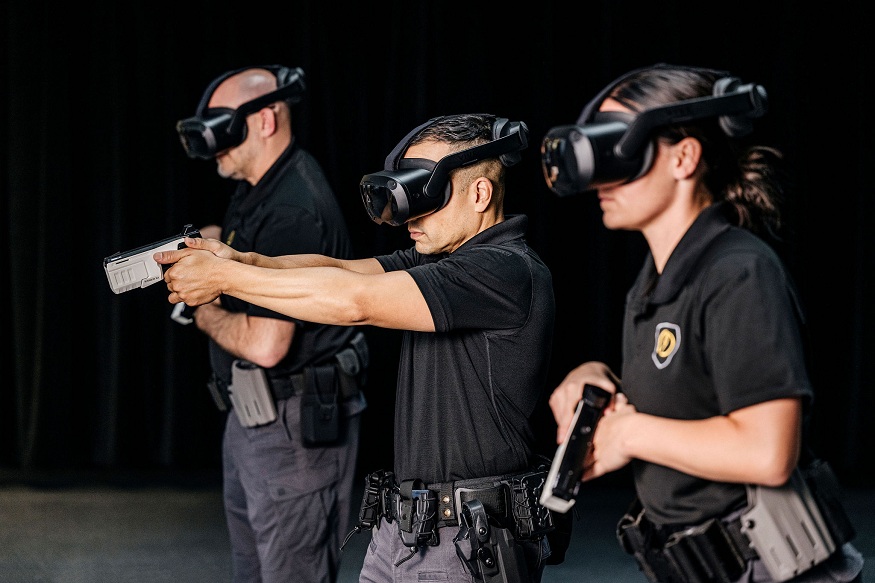
Emergencies situations can occur without warning, placing immense pressure on individuals and organizations responsible for responding effectively. The effectiveness of any emergency response often depends on how well responders have been trained before a crisis occurs. While traditional training methods like classroom instruction, drills, and tabletop exercises remain valuable, they can be limited in their ability to recreate the complexity and intensity of real-world emergencies. Hence, an increasing number of organizations are opting for VR crisis intervention training.
The Impact of Virtual Reality on Crisis Management and Emergency Preparedness Training
Virtual Reality (VR) has emerged as a revolutionary solution that significantly enhances emergency preparedness and crisis response training. By creating highly immersive and interactive digital environments, VR enables trainees to experience realistic emergency situations without exposing them to actual danger. Rather than replacing conventional training methods entirely, VR crisis intervention training often serves as a powerful complement that strengthens existing disaster preparedness programs and improves overall training outcomes.
One of the greatest strengths of virtual reality technology is its ability to simulate highly realistic emergency situations. Participants can be placed inside detailed virtual environments that closely mirror real-life disaster scenarios. They may find themselves navigating a burning building, responding to a large-scale transportation accident, or coordinating rescue efforts during a natural disaster. The immersive nature of VR engages multiple senses, helping users feel as though they are truly present within the situation. This heightened realism can trigger emotional and psychological responses similar to those experienced during actual emergencies. As a result, trainees become better prepared to handle stress, make decisions under pressure, and remain focused during chaotic situations. Such experiences are difficult to replicate through traditional classroom-based instruction alone.
Another major advantage of VR-based emergency training is the opportunity for repeated practice. Traditional emergency exercises often require extensive planning, personnel, equipment, and financial resources, making frequent repetition difficult. Virtual reality removes many of these barriers by allowing trainees to revisit scenarios as often as needed. Users can participate in a wide variety of emergency situations tailored to specific learning objectives. Repeated exposure to these scenarios helps reinforce critical skills and knowledge while building confidence and competence. Through consistent practice, trainees develop stronger instincts and faster reaction times. Repetition also helps create muscle memory, allowing individuals to perform essential tasks more efficiently when confronted with real emergencies. This level of preparedness can significantly improve response effectiveness and reduce the likelihood of mistakes during actual crisis situations.
Safety is another key benefit of incorporating virtual reality into emergency response training programs. In real-life training exercises, there are often risks associated with physical hazards, equipment use, or environmental conditions. VR crisis intervention training eliminates these dangers by allowing participants to train in a completely controlled digital environment. Within this safe setting, individuals are free to make decisions, test strategies, and learn from errors without fear of injury or negative consequences. Mistakes become valuable learning opportunities rather than costly failures. This encourages trainees to experiment with different approaches, identify weaknesses, and refine their decision-making abilities.