

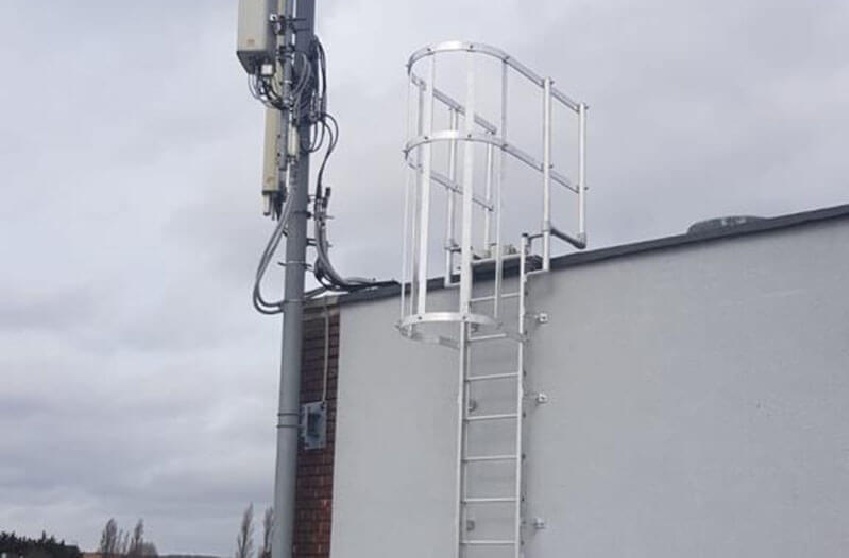
If there is one piece of equipment that rooftop personnel should never overlook, it is the ladder. Serving as a critical means of reaching elevated areas that would otherwise be difficult, risky, or impossible to access, ladders play a fundamental role in ensuring worker safety during rooftop operations. Whether employees are conducting inspections, performing maintenance, servicing HVAC systems, or carrying out repairs, a dependable ladder provides a secure route to and from the roof. Among the many ladder options available today, fixed access ladders remain one of the most widely used and trusted solutions for commercial and industrial facilities.
A Brief Insight into Fixed Access Ladders
A fixed access ladder, as the name implies, is permanently attached to a structure and designed for long-term use. Unlike portable ladders that can be moved from one location to another, fixed ladders remain securely mounted to a building, providing consistent and reliable access whenever rooftop entry is required. These ladders are commonly found on commercial, industrial, and institutional buildings, and their installation is often mandated by building regulations and safety codes. Their permanent nature makes them an essential component of a building’s overall access and safety infrastructure.
Read More: Precision Millwright Services: The Critical Link Between Installation and Reliable Operation
Despite their importance, fixed access ladders are sometimes treated as secondary considerations during construction projects. In many cases, builders focus heavily on the primary structural elements of a building and give less attention to access systems, assuming they will see minimal use after construction is completed. As a result, ladders may be installed late in the project timeline or incorporated as an afterthought. This approach can lead to designs that fail to maximize safety, durability, or ease of use. However, such assumptions overlook the reality that fixed access ladders often become indispensable throughout the life of a building.
Once a structure is operational, rooftop access is frequently required for routine maintenance, inspections, equipment servicing, and emergency situations. Building managers, maintenance personnel, contractors, and safety inspectors all rely on these ladders to perform essential tasks. As a result, the quality, design, and installation of a fixed access ladder have a direct impact on worker safety and operational efficiency.
Like all ladder systems, fixed access ladders consist primarily of two essential components: rungs and rails. The rungs are the horizontal steps that climbers use to ascend or descend the ladder. They must be strong, properly spaced, and capable of supporting the weight of users and their equipment. The rails, on the other hand, are the vertical side members that support the rungs and maintain the ladder’s structural integrity. Together, these components form the basic framework that allows safe and efficient movement between different elevations.
Read More: How Perth Manufacturers Use 3D Printing for Low-Volume Production
What distinguishes fixed access ladders from many other ladder types is the inclusion of mounting brackets. These brackets serve a vital purpose by securing the ladder directly to the building or structure. Without reliable attachment points, even a well-constructed ladder could become unstable and hazardous. Brackets ensure that the ladder remains firmly in place during use, reducing movement and enhancing overall safety. Their design and placement are crucial factors in determining the ladder’s long-term performance and structural stability.